

Baking soda can whiten teeth, but only by removing surface stains, not by changing their natural color. It works as a mild abrasive, gently cleaning and polishing the enamel to help your smile look brighter and fresher.
Many people use it as a natural teeth-whitening remedy. Even dentists recognize its effectiveness in toothpaste formulas.
However, it is not a substitute for professional whitening. Knowing how baking soda works, its limits, and the right way to use it can help you whiten safely and avoid enamel damage.
What Is Baking Soda?
Baking soda, or sodium bicarbonate, is that simple white powder you probably have in your kitchen. Most people know it for baking or cleaning, but it does much more.
When it comes to your teeth, it acts like a gentle scrub, polishing away stains from coffee, tea, or even everyday meals.
It’s not harsh, just mildly gritty, which makes it helpful in lifting off surface buildup. Another bonus is that it balances acids in your mouth, helping protect your enamel and keeping your mouth feeling fresher and cleaner.
If you notice black spots on teeth that are not cavities, baking soda alone might not fix them. Those stains could be caused by other factors like tartar buildup or certain foods.
How Does Baking Soda Work to Whiten Teeth?
Baking soda whitens teeth by mechanically removing surface stains. When you brush with it, its tiny particles gently polish the enamel, breaking down and lifting off stains.
However, it does not contain bleaching agents like hydrogen peroxide, which are found in professional whitening products. That means it won’t whiten the inner color of your teeth; it only helps clean and brighten what’s on the outside.
In short, baking soda works best for surface stains, not deep discoloration.
Example:
Imagine your teeth are like a white shirt with coffee stains. Baking soda helps scrub those stains off, but it won’t make the fabric whiter than it originally was.
What Science Says About Baking Soda for Teeth Whitening?
Research supports the idea that baking soda can improve the whiteness and cleanliness of teeth when used correctly.
- A 2017 study found that toothpaste with baking soda removed stains more effectively than toothpaste without it.
- Another study showed that baking soda-based toothpaste helped whiten teeth and reduce plaque.
These studies confirm that baking soda is effective for surface stain removal and can lead to a visibly brighter smile over time.
Is It Safe to Use Baking Soda on Teeth?
Yes, baking soda is usually safe for your teeth as long as you use it properly and not too often.
Still, a few precautions matter:
Try not to use it every day; brushing too frequently with plain baking soda can slowly wear down your enamel.
Be gentle while brushing; use soft, circular motions instead of hard scrubbing.
For safer use, mix a little baking soda with your regular toothpaste rather than using it by itself.
If your gums often feel sore or swollen, baking soda alone might not help much. You can cure gum disease without a dentist using safe, home-based care options.
3 Simple Ways to Use Baking Soda for Teeth Whitening
1. Baking Soda and Water
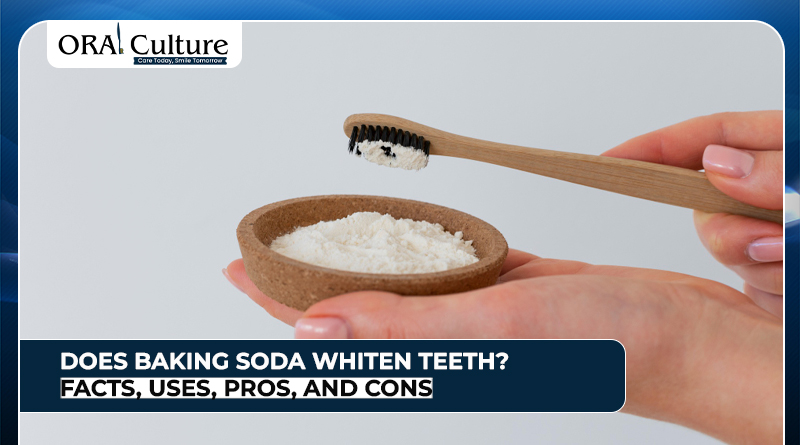
Take about half a teaspoon of baking soda and add just enough water to make a soft paste. Use this to brush your teeth for about a minute gently.
Rinse your mouth well when you are done. It’s best to use this method only two or three times a week to avoid wearing down your enamel.
2. Baking Soda and Toothpaste
You can also add a tiny pinch of baking soda to your regular toothpaste. It gives your brush a gentle whitening boost and makes cleaning more effective without being harsh.
This simple trick lets you enjoy the benefits of baking soda without the extra step of mixing a separate paste.
3. Baking Soda and Hydrogen Peroxide (Optional)
Some people combine baking soda with a little hydrogen peroxide to tackle stubborn stains that don’t fade with regular brushing. It can work, but it’s strong, so use it very rarely and never for more than a minute or two.
If you ever feel a burning sensation while using mouthwash or whitening products, it may be due to alcohol or other strong ingredients.
Make sure to rinse your mouth thoroughly afterward, and stop immediately if your gums feel sore or irritated.
Pros and Cons of Using Baking Soda for Teeth Whitening
| Pros | Cons |
| Removes surface stains naturally | Can be abrasive if overused |
| Neutralizes mouth acids | Doesn’t whiten deep stains |
| Fights bad breath | May cause tooth sensitivity |
| Inexpensive and easy to find | Not a replacement for fluoride toothpaste |
When Baking Soda Isn’t Enough?
If your teeth are deeply discolored from genetics, medications, or long-term staining, baking soda won’t fully fix it. In such cases, professional whitening treatments or dentist-approved whitening kits are better options.
Dentists often rely on whitening gels made with hydrogen peroxide or carbamide peroxide. These ingredients go beneath the surface of the enamel, breaking down deep stains that regular brushing or home remedies can’t reach. They are stronger but also controlled and safe when done professionally.
Think of it this way:
- Baking soda = Surface cleaner
- Professional whitening = Deep cleaner
Realistic Expectations
It’s important to be realistic. Baking soda won’t make your teeth instantly white like a commercial whitening ad. But with consistent and proper use, it can gradually make your smile cleaner, brighter, and fresher-looking.
Final Thoughts
If you use baking soda carefully and pair it with a good oral care routine, it can help keep your teeth brighter and cleaner.
For stronger whitening results or customized dental care, it’s always smart to ask your dentist first.
Visit Oral Culture to explore expert dental tips, trusted products, and professional whitening advice.
People Also Ask
How long does it take for baking soda to whiten teeth?
You might see a small change in a few weeks if you use it a few times a week. It works slowly and only on surface stains, like from coffee or tea. Deep stains or naturally darker teeth take longer or may not change much.
Can baking soda damage my enamel?
Yes, it can if you use it too often or brush too hard. Baking soda is a little rough, so gentle brushing is important. Use it only a couple of times a week, not every day.
Is baking soda better than toothpaste?
No, toothpaste is still better for daily use. It has fluoride, which protects your teeth and makes them stronger. Baking soda can help clean and whiten, but it can’t replace your regular toothpaste.
Can I mix baking soda with lemon juice for whitening?
No, that’s not safe. Lemon juice is acidic and can wear down your enamel. It might make your teeth look cleaner for a short time, but it can cause long-term damage.
Is baking soda safe for people with braces or dental work?
It’s better not to use it. Baking soda can scratch the surface of braces, veneers, or crowns. If you have dental work, ask your dentist for a safer cleaning method.